


HOME

WORK

ABOUT

FOLIO@2025

9 min read

CASE STUDY

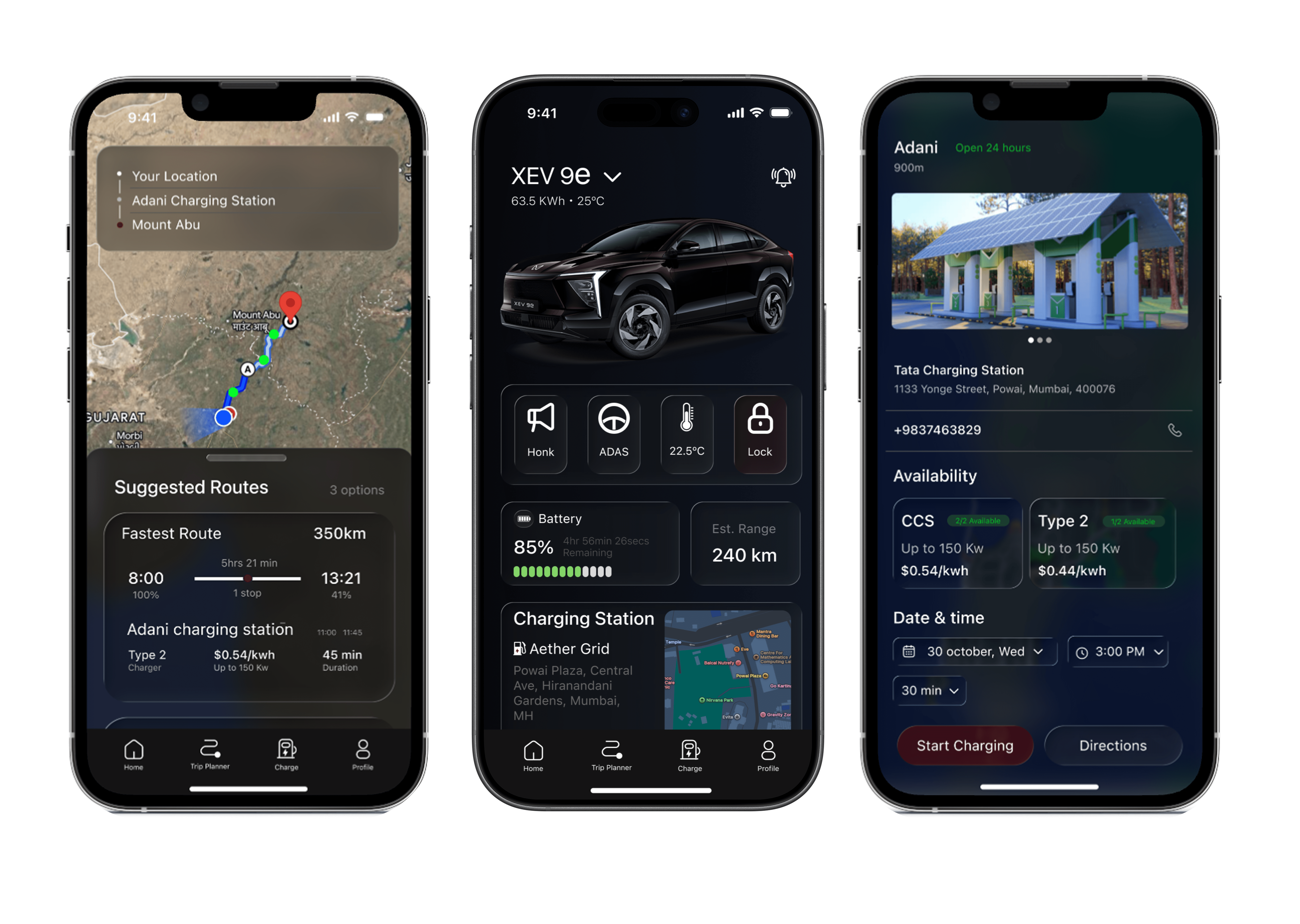
Reducing Range Anxiety EV Users

OVERVIEW

Reducing Range Anxiety

PortaNova is a global ecosystem platform designed to transform the management of port equipment, specifically Automated Terminal Truck (ATT) equipments, by shifting from the traditional linear "sell-and-discard" model to a circular economy model. This innovative approach addresses issues of high emissions, wasted assets, and unaffordable costs for ports.


The aim is to turn port assets into a circular engine for global decarbonization. It seeks to accelerate decarbonization and green corridors by extending asset lifecycles, reducing emissions, and optimizing resource use.


READ FULL CASE STUDY IN NOTION

ROLE

INTERACTION DESIGNER

INTERACTION DESIGNER

INTERACTION DESIGNER

TEAM

SANCHITA THIAGARAJAN

SAIDIYA K C

YASHIKA P

SKILLS

USER RESEARCH

VISUAL DESIGN

SERVICE DESIGN

TIMELINE

8 WEEKS

2 WEEKS

2 WEEKS

SO WHAT?

The costly, linear approach is crippling global ports by actively failing crucial decarbonization goals, and denying OEMs reliable long-term revenue.

The linear approach creates significant sustainability, financial, and operational problems:

  • Fails Sustainability Goals: Scrapping and replacing equipment leads to significant greenhouse gas emissions and resource waste, inhibiting ports' ability to meet sustainability targets, including decarbonization and participation in green corridors.

  • Wasted Capital & Idle Assets: Equipment is often discarded prematurely, resulting in a decapitalization of assets and capital loss. Buying for peak demand also creates idle times and inefficient capital use.

  • Missed Revenue for OEMs: OEMs lose the opportunity to generate long-term, recurring income from lifecycle services like refurbishment and leasing, missing out on crucial lifecycle monetization.

  • Limited Competitiveness: Smaller ports are restricted in their access to modern, modular, IoT-enabled infrastructure, which ultimately restricts their growth and competitiveness.


CURRENT SCENARIO

Fixing Global Waste, Funding Green Ports, and Forging the Future of Maritime Commerce

The current scenario is dominated by a costly "sell-and-discard" linear model where OEMs' equipment is discarded prematurely, leading to a capitalization loss for ports and actively hindering global decarbonization goals.


  • Linear Mindset: Original Equipment Manufacturers (OEMs) typically adhere to a "sell-and-discard" approach, where equipment is sold once, used for a limited period, and then prematurely scrapped or left idle.

  • High Costs and Barriers: This necessitates repeated, costly purchases. New equipment is extremely expensive, which creates an overwhelming capital expenditure burden, especially for small or developing ports with limited budgets.

  • Outdated Practices: Existing maintenance often uses discrete, scheduled methods rather than modern, data-driven approaches.


"Since big machines are too expensive to replace and bad for the Earth to throw away, what if we built a high-tech platform to fix, share, and track them, turning global waste into lasting profit?"

WHY?

Global Push for Decarbonization and Green Corridors

The global maritime industry, responsible for approximately 3% of all global greenhouse gas (GHG) emissions, faces immense pressure to transition to zero-emission operations. This push is coordinated through international agreements and national strategies:

  • Global Targets: The International Maritime Organization (IMO) has set a target to reduce total GHG emissions by at least 50% by 2050 relative to 2008 levels, with checkpoints in 2030 and 2040.

  • Green Corridors Defined: A Green Shipping Corridor is a specific trade route between two or more ports where zero-emission shipping solutions are demonstrated and reported. They serve as vital testing grounds to accelerate the adoption of zero-emission fuels, vessels, and infrastructure at scale.

  • Country Commitment: Over 20 countries have signed the Clydebank Declaration (COP26), committing to establishing at least six zero-emission maritime routes by the middle of the coming decade, with signatories including the U.S., Canada, Norway, Germany, and Japan. Countries are also launching significant funding programs, such as the U.S. EPA's $3 billion Clean Ports Program.

  • Key Corridors in Development: Examples include the Singapore-Rotterdam Green & Digital Corridor and the Los Angeles-Shanghai Transpacific Green Shipping Corridor.


SOLUTION

Global Push for Decarbonization and Green Corridors

This integrated solution solves your problem with efficient asset management, transparent operations, increased revenue, and a meaningful positive impact on sustainability and modernization.

Why Would Someone Buy Old Port Equipment or Infrastructure?

Even if port equipment is no longer cutting-edge, it can still hold significant value for certain buyers who have different needs, resources, or contexts.

Goals & Objectives

A secure, collaborative circular economy platform that empowers stakeholders with transparent operations, new revenue streams, and accessible, sustainable infrastructure for global port modernization.

SO NOW WHAT?

Introducing PortaNova

A global ecosystem platform transforming how port equipment for ATT is managed by shifting from traditional one-time sales to a circular economy model.


  • It enables ports, OEMs, and logistics partners to collaborate through a digital ecosystem featuring equipment resale, refurbishment, leasing, asset sharing, and sustainability reporting.

  • Accelerates decarbonization and green corridors by extending asset lifecycles, reducing emissions, and optimizing resource use.

  • It empowers small and developing ports with affordable, sustainable infrastructure modernization while unlocking long-term revenue streams for OEMs through service and lifecycle management.

  • A smarter, more sustainable way to power global maritime infrastructure.


Who Are the Buyers?

Even if port equipment is no longer cutting-edge, it can still hold significant value for certain buyers who have different needs, resources, or contexts.

HOW?

Digital Interventions to power this model

A unified digital layer that connects, automates, and optimizes every stage of the port equipment lifecycle.

Proposition

Even if port equipment is no longer cutting-edge, it can still hold significant value for certain buyers who have different needs, resources, or contexts.

Market Analysis

A secure, collaborative circular economy platform that empowers stakeholders with transparent operations, new revenue streams, and accessible, sustainable infrastructure for global port modernization.

Some ATT Equipments that can be refurbished and sold

Even if port equipment is no longer cutting-edge, it can still hold significant value for certain buyers who have different needs, resources, or contexts.

FINANCIAL ASPECTS

Business Model

A unified digital layer that connects, automates, and optimizes every stage of the port equipment lifecycle.

Sensors Required

Even if port equipment is no longer cutting-edge, it can still hold significant value for certain buyers who have different needs, resources, or contexts.

The Future of OEMs

OEMs evolving this way will unlock resilient growth, competitive advantage, and stronger customer partnerships in a sustainable global economy.

PERSONA

MOODBOARD

COLOR PALETTE